How to get to Rottnest Island | Complete guide

Rottnest Island sits just 19 km off the coast of Perth, making it one of Western Australia’s easiest and most popular day trips. Most people get there by high-speed ferry departing from Fremantle, Hillarys, or central Perth, with travel times ranging from 25–90 minutes depending on the route. You can also arrive by air on a short scenic flight or join a guided tour that bundles ferry tickets, bike hire, and island activities.

Where is Rottnest Island located?

Address: Rottnest Island, Western Australia

Main arrival point: Thomson Bay Settlement, Rottnest Island WA 6161, Australia.
Find on map

Distance from Perth: ~19 km (~12 mi) offshore.
Time taken from Perth: ~90 minutes by ferry (each way).

Distance from Fremantle: ~16 km (~10 mi).
Time taken from Fremantle: ~25–30 minutes by ferry (each way).

Distance from Hillarys (north of Perth): ~40 km (~25 mi).
Time taken from Hillarys: ~45 minutes by ferry (each way).

Access: Accessible only by sea or air. Ferries dock at Thomson Bay, the island’s main hub for visitor services and transport.

Getting to Rottnest Island from nearby cities
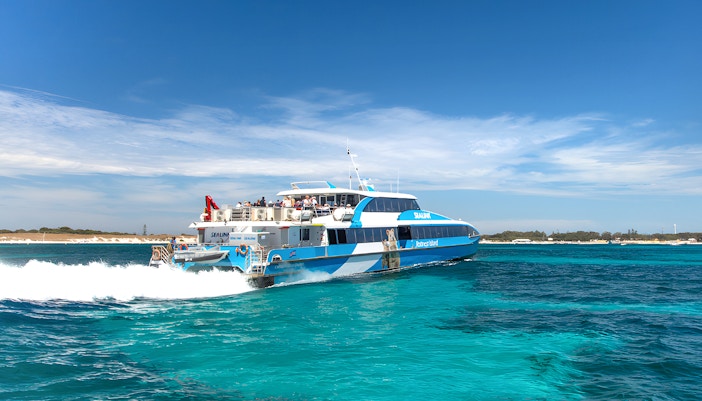
Tourists on a ferry near Rottnest Island with coastline view, part of the guided bus tour.

Perth

  • Mutiple return ferries run daily from Perth CBD (Barrack Street Jetty).
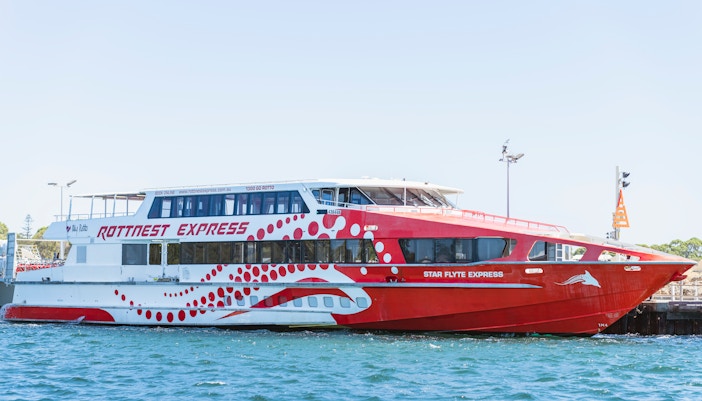
  • You'll reach in about 90 minutes. The direct high-speed ferries are operated by Rottnest Express & SeaLink.
  • You can even reach in about 12–15 minutes by seaplane or light aircraft from Perth. These are premium but fastest option and dependent on weather.
  • Private boats take about 30–60 minutes depending on vessel but know that mooring fees and marine park rules apply.
  • Opt for a full-day tour from Perth that usually include ferry transfers plus optional add-ons like bike hire, bus tours, or snorkel gear.
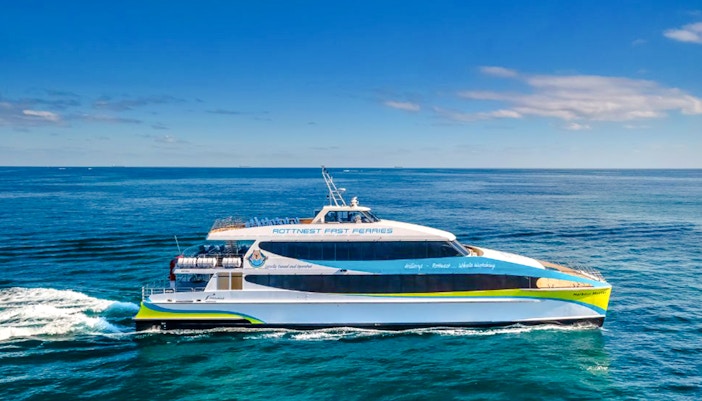
Rottnest Fast Ferries vessel cruising on the ocean.

Hillarys

  • Multiple return ferries depart daily from Hillarys Boat Harbour in Perth’s northern suburbs.
  • You’ll reach Rottnest Island in about 45 minutes aboard high-speed services operated by Rottnest Fast Ferries.
  • Scenic helicopter transfers are also available from Hillarys, offering a quick, premium option with flight times of just 10–15 minutes, though these depend heavily on weather.
  • Private vessels can make the crossing in 30–50 minutes.
  • You can also book a return ferry tour from Hillarys, which typically bundles ferry tickets with extras like bike hire, bus tours, whale-watching add-ons (seasonal), or snorkel gear.
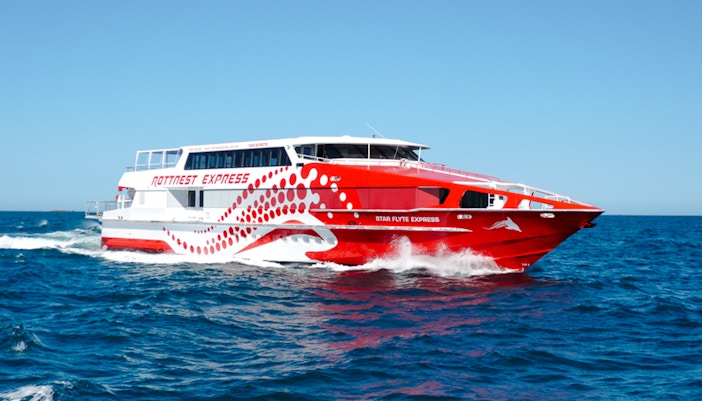
Red and white Rottnest Express ferry cruising through blue ocean waters.

Fremantle

  • Ferry services depart from two terminals: B-Shed Ferry Terminal (Victoria Quay) and Northport Ferry Terminal (Rous Head).
  • From B-Shed, both Rottnest Express and SeaLink operate direct crossings that take only 25–30 minutes.
  • From Northport, SeaLink offers a slightly longer but often less crowded 30–35 minute service with easier parking options.
  • Private boats typically take 20–40 minutes, depending on vessel size and ocean conditions.
  • Save the hassle by booking a full-day tour from Fremantle**** with extras like bike hire, bus tours, glass-bottom boat rides, or snorkelling equipment.
Why taking a Rottnest Island guided tour makes sense

  • Skip the planning guesswork: Tours handle ferry timings, check-ins, and island entry from Perth, Fremantle, or Hillarys.
  • Smooth logistics: Sit back on the scenic ferry ride and start exploring the island as soon as you arrive.
  • More time on the island: Enjoy several free hours to swim, snorkel, cycle, or relax on secluded bays.
  • Easy navigation: Upgrade the tour for a guided bus loop or a segway tour that helps you cover key spots like Wadjemup Lighthouse, Cathedral Rocks, and hidden beaches.
  • No transport stress: You'll be doing a lot of walking or cycling on the island. Most people opt for a full-day tour that includes bike hire so that you don’t have to worry about availability.
  • One full day done right: You'll easily get 5+ hours on the island. Spend time on trails, meet quokkas, and enjoy beach time without rushing for the last ferry.

How Rottnest Island tours work

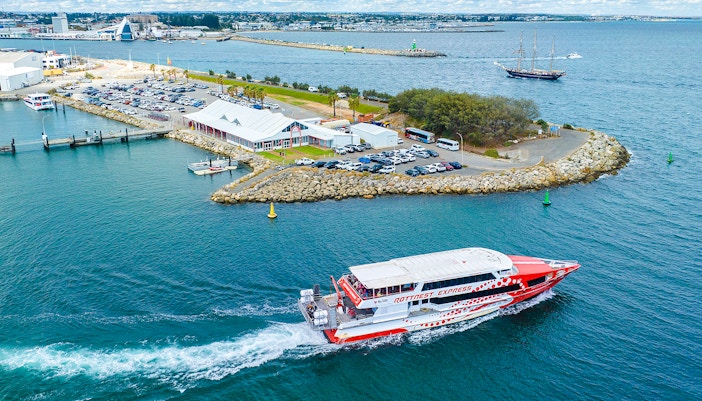
Rottnest Express ferry leaving jetty with cars and buildings in Fremantle, Australia.

The ferry ride

Most tours start with a return ferry from Perth, Fremantle or Hillarys, so you can choose the port that suits your schedule and place of stay. The ride takes 25 to 90 minutes depending on where you board. Many tours let you add bike hire, snorkel gear or a guided bus tour during booking, which keeps things simple once you land on the island.

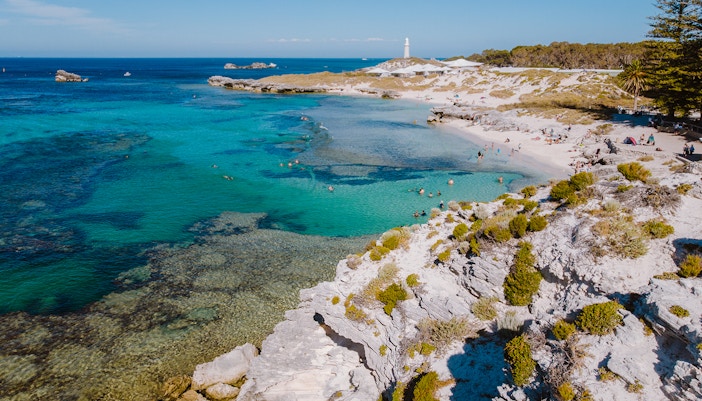
Tourists swimming at a beach on Rottnest Island with a lighthouse in the distance.

Time on the island

Rottnest is about 19 square kilometers, so give yourself time to move between beaches, bays, historic spots and lighthouse viewpoints. There are over 45 kilometres of trails and plenty of lookouts, swimming spots and quokka hangouts. Most visitors mix a few viewpoints with a relaxed swim, a picnic or a slow wander through the settlement. You can shape the day the way you like because the island is easy to explore and full of small surprises.

Rottnest Express ferry docked at a pier in clear blue water.

Return ferry

Your voucher will list the time of your trip back, so just make sure you reach the jetty a little before boarding. The return ride is straightforward and takes you back to the same port you selected when booking. It’s an easy end to the day after exploring the island at your own pace.

Things to do on Rottnest island

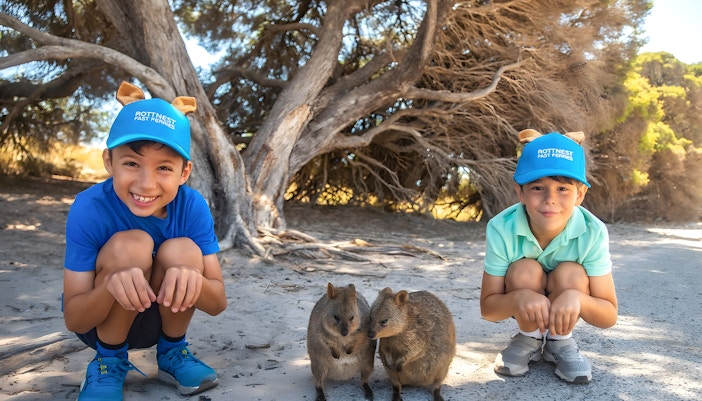
Children crouching near quokkas on Rottnest Island during a guided bus tour.

Meet the quokkas

You’ll see quokkas around Thomson Bay Settlement, Heritage Common and the shady paths leading to Bathurst Lighthouse. They’re friendly but protected, so keep your distance, let them approach naturally and enjoy taking photos without touching or feeding them.

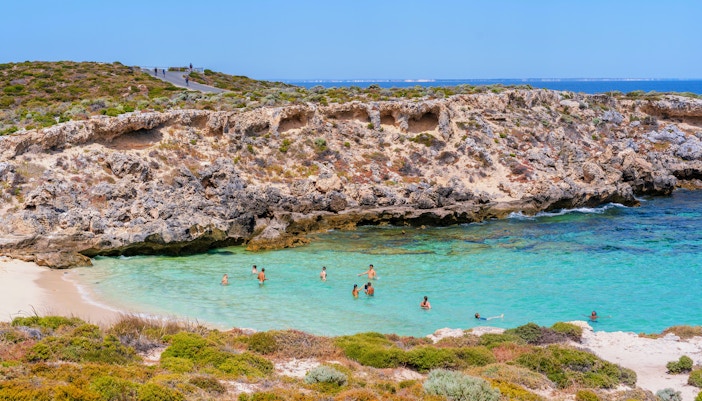
Swimmers enjoying clear waters at Little Salmon Bay, Rottnest Island, with rocky cliffs in the background.

Swim at postcard-worthy bays

Rottnest has calm, clear swimming spots like The Basin, Pinky Beach and Parakeet Bay. These beaches usually have gentle entry points, so you can wade straight into the water and spend unhurried time relaxing before moving on to your next stop.

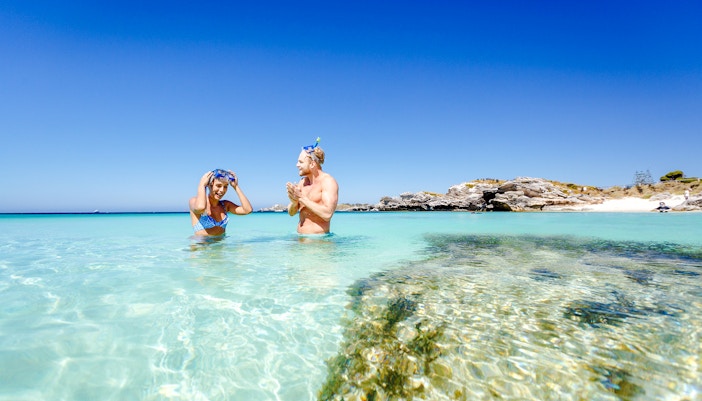
Couple snorkeling in clear turquoise water at Rottnest Island, Australia.

Snorkel at sheltered reefs

Pack or rent snorkel gear and try easy spots such as Little Salmon Bay, Parker Point and Henrietta Rocks. The reefs are close to shore, so even beginners can see colourful fish, seagrass gardens and old wreck remains without needing deep-water experience.

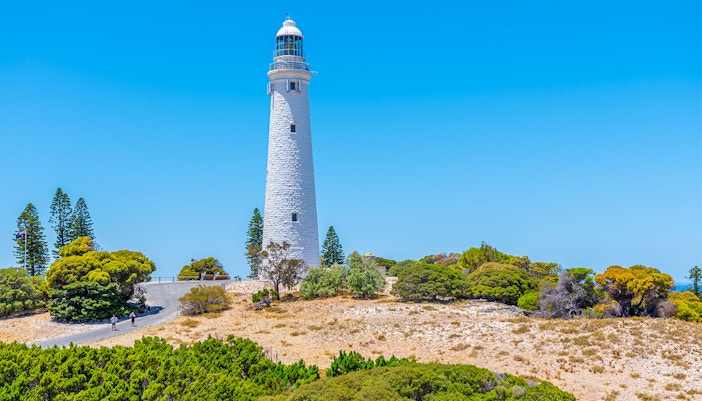
Rottnest Island lighthouse surrounded by trees under a clear blue sky.

Walk up to Wadjemup Lighthouse

Sitting at the island’s highest point, Wadjemup Lighthouse gives wide views of the coastline and inland salt lakes. It’s accessible via the Gabbi Karniny Bidi trail or the island bus, making it a simple stop between beaches or during a loop around the island.

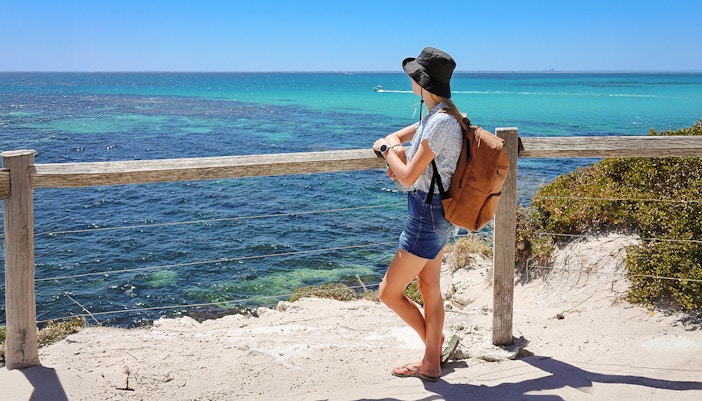
Woman enjoying ocean view from Rottnest Island lookout.

Explore Rottnest’s walking trails

The island has more than 45 kilometres of marked trails, including the Wadjemup Bidi network. Short sections like the Ngank Yira Bidi are great for casual walkers, while Parker Point and West End loops suit travellers who want a more active coastal route.

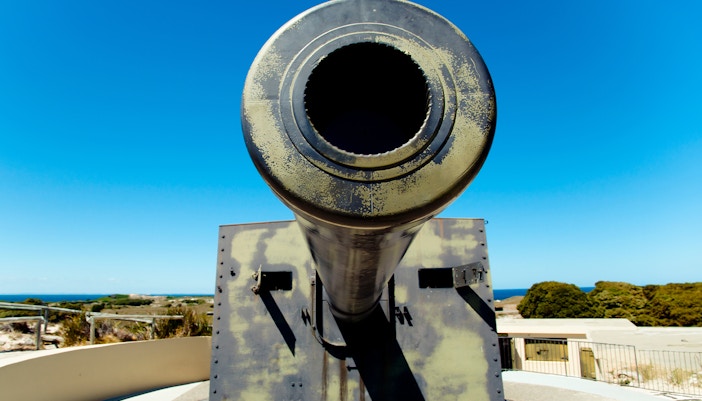
Rottnest Island coastal gun with ocean view in Fremantle, Australia.

Visit historic sites

Stop by Kingstown Barracks, the Pilot Boathouse and the Oliver Hill Gun Battery to understand the island’s military history. These spots are scattered across the island and easy to pair with beach visits, giving you a mix of nature and stories from the past.

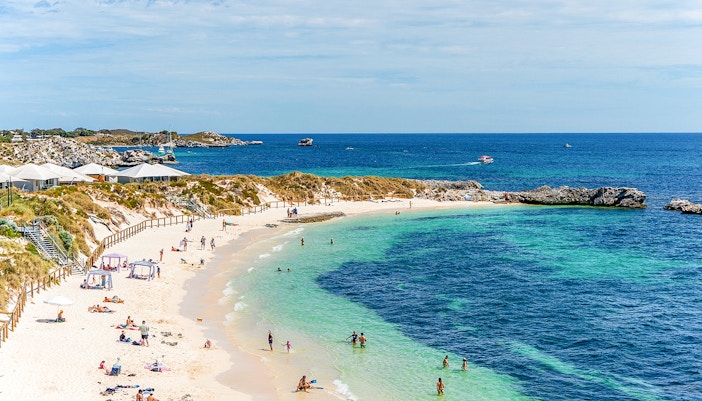
People enjoying the sun and sea at Pinky Beach, Rottnest Island.

Picnic at quiet coastal spots

Carry snacks or pick up food near Thomson Bay, then head to relaxed areas like Geordie Bay, Longreach Bay or the lawns near Pinky Beach. These places offer calm water views and enough space to spread out without feeling rushed between activities.

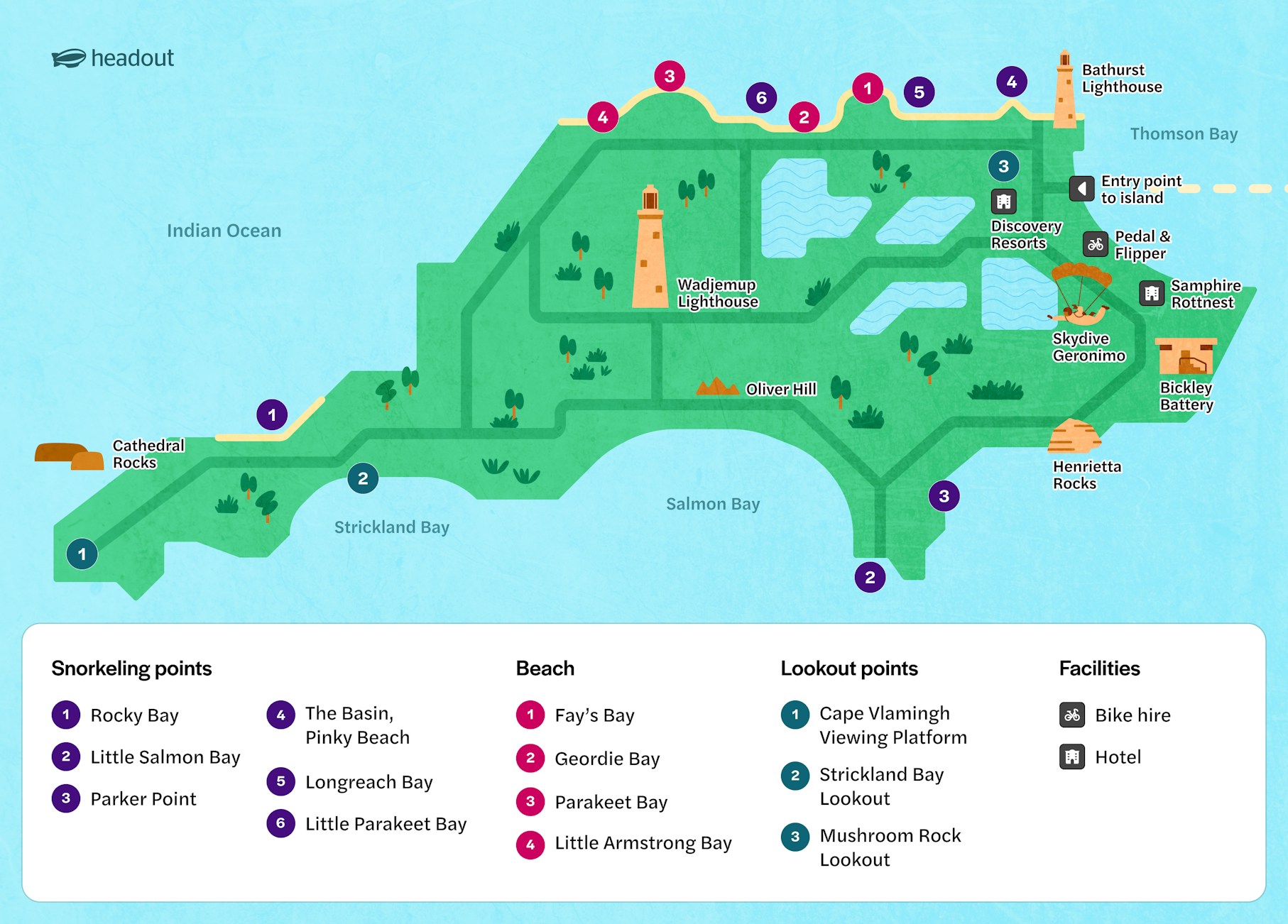
Rottnest Island map

Rottnest Island map highlighting snorkeling spots, beaches, and lookouts.

Suggested itinerary for Rottnest Island tours

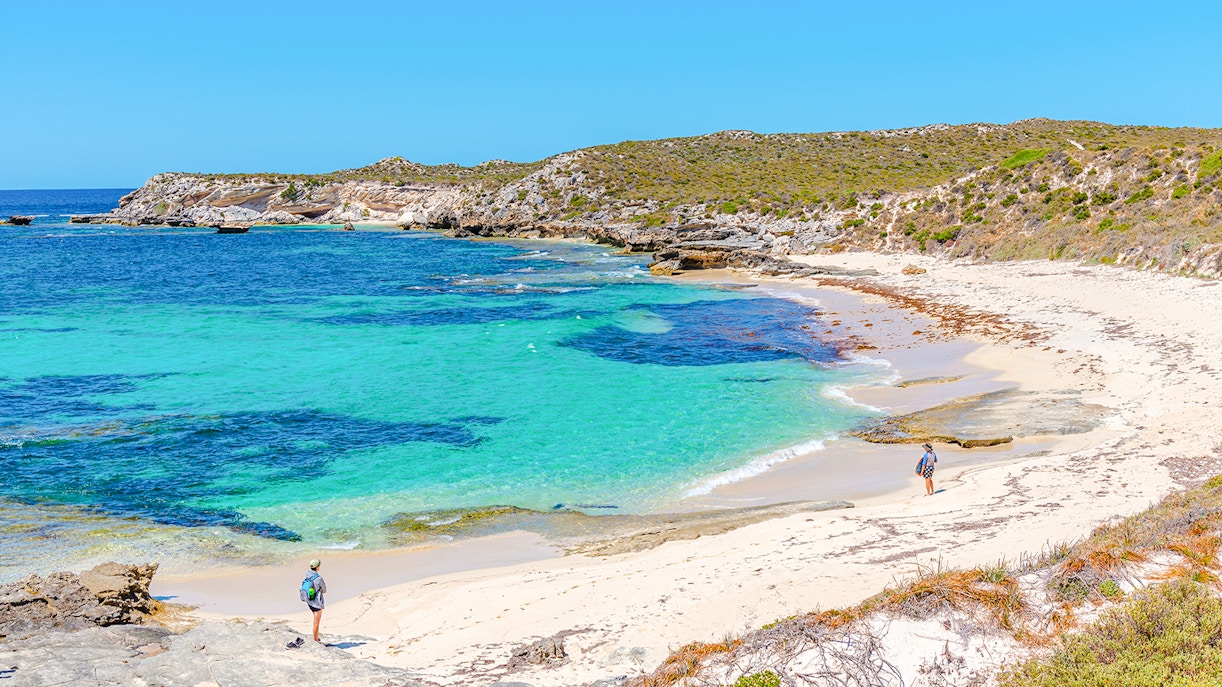
Visitors walking along the sandy shore of Strickland Bay, Rottnest Island, with clear turquoise water.

Morning: Arrive at Thomson Bay and take a few minutes to get your bearings. Start with an easy quokka-spotting walk around the Settlement and Heritage Common where they’re most active. Head towards The Basin or Pinky Beach for a relaxed first swim with clear shallow water, then continue up to Bathurst Lighthouse for coastal views and photos.

Midday: Make your way inland or join the bus route towards Wadjemup Lighthouse, the island’s highest point. Spend time exploring the lookout area or walk a short section of the Wadjemup Bidi trail for salt lake views. Continue to Little Salmon Bay or Parker Point for snorkelling. Both spots have reef close to shore, which makes them great mid-day stops when the sun lights up the water. Pick up lunch from Thomson Bay or pack a picnic to enjoy at Geordie Bay or Longreach Bay where the water stays calm and the views are wide open.

Afternoon: Visit a historic site such as Kingstown Barracks or Oliver Hill Gun Battery to break up the beach time with a bit of island history. Spend your last hour exploring another quiet cove or browsing around the Settlement for snacks and souvenirs. Return to the ferry terminal at Thomson Bay in time for your scheduled late-afternoon departure.

Travel tips for reaching Rottnest Island 

  • Pre-book your ferry: Especially in summer, weekends, or school holidays. Seats can sell out quickly.
  • Label and limit your luggage: Ferries allow checked bags up to 22 kg (max 800×500×400 mm). Items must be tagged correctly for delivery.
  • Respect the wildlife: Never feed or touch quokkas or other animals. Human food disrupts natural behaviors and is strictly prohibited.
  • Watch out for stingers and snakes: Blue-bottle jellyfish sometimes wash ashore, and venomous dugites live on the island. Be cautious while walking or swimming.
  • Bike hire is busy in season: Drawing from visitor experience, the demand for hire bikes and e-bikes spikes, so book ahead or carry backup transport plans.
  • Enjoy changing coastline views: The ferry crosses the Swan River, then opens out to sweeping Indian Ocean scenery. Expect turquoise water, limestone cliffs, passing sailboats, and the first glimpses of Rottnest’s white-sand bays as you approach the island.
  • Watch for whales in season: From September to November, keep an eye on the horizon during the ferry ride. Humpback whales often migrate past Rottnest, and you may spot spouts, tail slaps, or breaching if the ocean is calm enough.

Frequently asked questions on how to get to Rottnest Island

What’s the cheapest way to get to Rottnest Island?

Usually the most affordable option is booking a standard ferry ticket from Fremantle. It’s the shortest crossing, often has more departures, and prices tend to be lower than Perth or Hillarys services.

What’s the fastest way to reach Rottnest Island?

The quickest crossing is from Hillarys or Fremantle, taking about 25–45 minutes depending on the operator. Seaplane flights from Perth are even faster at around 12–15 minutes but cost significantly more.

Is a guided tour worth it?

A tour makes sense if you want ferry transfers sorted, island entry included, and upgrades like bike hire or a bus tour pre-arranged. It also helps if you prefer structure over planning your own transport and timings.

Do I need to book ferry tickets in advance?

Yes. Ferry seats often fill up on weekends, school holidays, and summer mornings. Pre-booking also ensures you get your preferred departure time and return schedule.

Can I drive to Rottnest Island?

No. Private vehicles are not allowed on the island, and you cannot drive there.

Which ferry terminal should I choose?

Pick based on convenience. Perth offers a longer scenic river cruise, Fremantle provides the quickest and most frequent sailings, and Hillarys is ideal for those staying north of the city.

Are there luggage limits on the ferries?

Yes. Most operators allow small carry-on bags and have specific weight and size limits for checked items. Oversized gear like surfboards or large coolers may require extra fees or be restricted.

Does the weather affect ferry services?

Strong winds and rough seas can delay or cancel crossings, especially in winter. Operators typically notify passengers by email or SMS, so keep your phone handy and allow some flexibility in your plans.